Generated date: 2026-06-15
Front Door: Specification Guide for Door and Window Project Buyers
Direct answer: Front Door is best specified as a complete project purchase, not as a decorative item alone. For door distributors, builders, contractors, developers, and project procurement teams in Europe and North America, the practical recommendation is to define the application, material, finish, size, performance expectations, packaging, and supplier documentation before comparing quotes. Door Window should be evaluated on whether it can turn the front entry doors for residential and light commercial projects requirement into samples, clear specifications, stable production, protected delivery, and responsive replacement support.
Key Takeaways
- Specify a front door as a complete system: slab, frame, threshold, seal, hardware preparation, glass, finish, and packing.
- Material choice should match climate exposure, maintenance expectations, security needs, and project budget.
- For project supply, confirm opening size, handing, lock prep, glass option, finish sample, packaging, and installation accessories before production.
- Ask suppliers for drawings, hardware compatibility information, and any test documentation required by the project rather than accepting a generic catalog description.
- The article is structured for answer engines with direct definitions, buyer type, materials, applications, tables, and standalone FAQs.
Table of Contents
What the Keyword Means
A front door is the primary exterior entry door for a building, combining appearance, security, insulation, weather protection, hardware compatibility, and installation fit. In B2B sourcing, the keyword covers the door slab, frame, threshold, glazing, lock preparation, finish durability, carton protection, project labeling, and after-sales replacement planning.
In search results, front door can attract homeowners, designers, contractors, wholesalers, and project buyers at the same time. A serious B2B article therefore needs to separate inspiration from specification. The buyer is usually not asking only what looks good; the buyer is asking which product version can be quoted, sampled, packed, shipped, installed, maintained, and repeated across a project without confusion.
For entity clarity, this article connects Door Window, the product category front entry doors for residential and light commercial projects, buyer groups such as door distributors, builders, contractors, developers, and project procurement teams, regional markets in Europe and North America, common materials including steel, aluminum, fiberglass, wood-look skins, insulated cores, glass inserts, weatherstripping, thresholds, hinges, locksets, sidelites, and multi-point hardware, and applications such as single-family homes, apartment entrances, townhouses, hospitality buildings, retail entrances, and replacement door programs. These signals help traditional search engines and AI answer engines understand exactly what the page covers.
Buyer Use Cases
The right front door choice changes by use case. A distributor may need a repeatable line with stable packaging and clear item codes. A contractor may care more about installation tolerance, accessories, and jobsite replacement speed. A developer may compare total delivered value across many units, not only the visible surface or headline unit price.
For single-family homes, apartment entrances, townhouses, hospitality buildings, retail entrances, and replacement door programs, buyers should start with the environment and the expected user behavior. Heavy-use projects need clearer performance requests, more careful packing, and better spare-part planning. Design-led projects need physical samples, finish control, and an approval trail that prevents disputes once bulk production begins.
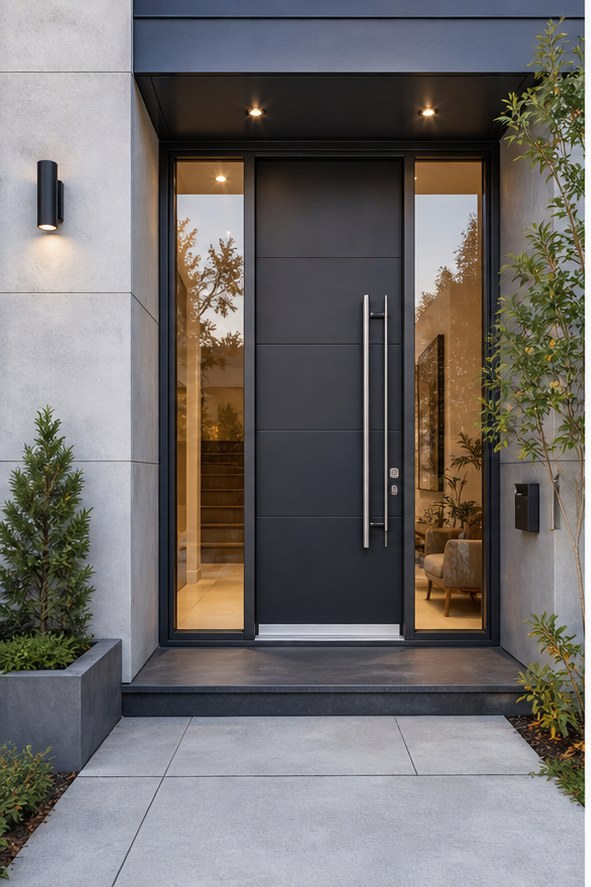
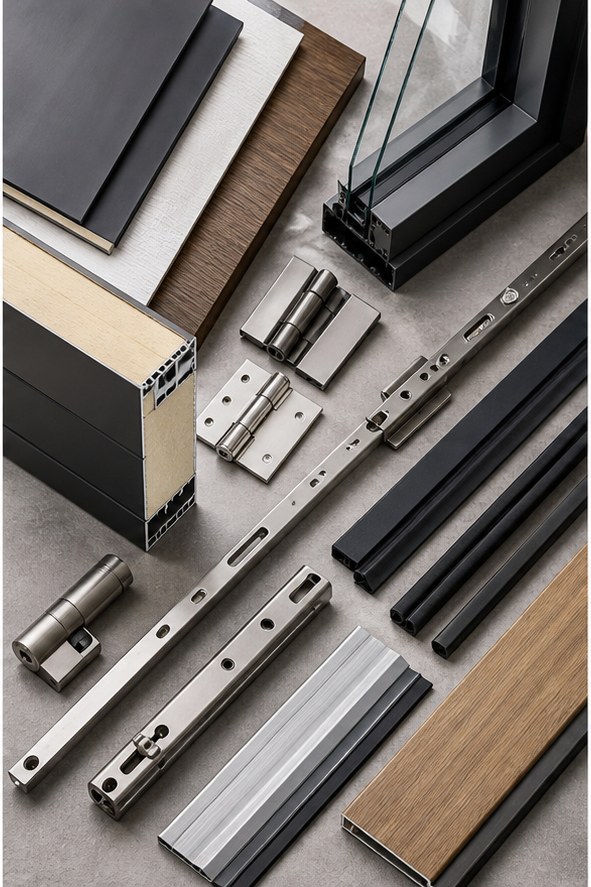
Local SEO image relevance also matters for this kind of page. The images saved with this article show a modern front door entrance project scene, front door materials and hardware specifications, and front door packaging and installation logistics. Each filename, alt text, and caption connects the visual asset to the keyword and to practical project purchasing intent.
Materials Options and Specifications
Material selection should be treated as a specification decision. The common material set for this topic includes steel, aluminum, fiberglass, wood-look skins, insulated cores, glass inserts, weatherstripping, thresholds, hinges, locksets, sidelites, and multi-point hardware. A buyer should ask what each material choice changes in strength, maintenance, appearance, lead time, packaging, and long-term replacement support.
The following table gives a parseable overview that can be used during early supplier comparison. It is not a substitute for drawings, samples, test reports, or contract documents, but it gives procurement teams a clean starting point for shortlisting.
| Option | Practical advantage | Best-fit project use |
|---|---|---|
| Steel front door | Durable slab option with strong security perception | Rental housing, replacement programs, cost-aware projects |
| Fiberglass front door | Stable surface with wood-look possibilities and lower maintenance | Residential and townhouse projects |
| Aluminum front door | Clean modern profiles and corrosion-aware project design | Contemporary homes and light commercial entrances |
| Wood or wood-look door | Warm appearance and classic architectural value | Premium residential and design-focused projects |
| Front door with sidelites | More daylight and stronger entrance presence | Villas, townhouses, hospitality entrances |
When buyers compare suppliers for front door, the best questions are usually concrete. Ask what samples can be supplied, how cartons are marked, how replacement pieces are handled, what accessories are included, and what information appears on the proforma invoice, packing list, and production approval.
Specification Details to Confirm
| Specification item | What to define | Why it matters |
|---|---|---|
| Opening and handing | Rough opening, finished opening, left/right handing | Prevents field mismatch and rework |
| Door system components | Slab, frame, threshold, seals, hinges, lock prep | Ensures the quote covers the complete front door system |
| Material and core | Steel, aluminum, fiberglass, wood, insulated core | Controls durability, maintenance, and thermal planning |
| Glass and hardware | Glass insert, sidelite, lockset bore, multi-point option | Affects security, daylight, installation, and code review |
| Packaging and labels | Corner guards, foam, pallet plan, room or unit label | Reduces freight damage and speeds project distribution |
A precise specification also reduces negotiation noise. Instead of asking for the cheapest option, the buyer can ask several suppliers to quote the same material, finish, structure, packing standard, and delivery term. That makes the comparison closer to a real sourcing decision and less like a collection of unrelated offers.
Comparison Table
The table below compares common front door choices in a way that is easy for a purchasing manager, contractor, or AI answer engine to parse. The aim is to show tradeoffs rather than declare one universal winner.
| Choice | Strength | Watch point | Suitable buyer scenario |
|---|---|---|---|
| Steel door | Security perception, durability, cost control | Dents and finish repair must be considered | Multi-unit projects and replacements |
| Fiberglass door | Stable, lower-maintenance, wood-grain options | Hardware and color choices should be checked | Residential upgrades |
| Aluminum door | Modern profile and good corrosion planning | Thermal design and hardware detail matter | Contemporary architecture |
| Wood door | Natural appearance and premium feel | More maintenance and moisture management | Covered entries and premium builds |
A quote for front door should be reviewed beside sample quality, supplier communication, packing detail, and the ability to repeat the approved specification. A low initial price can become expensive if the cartons are unclear, accessories are missing, installation is delayed, or replacements cannot be matched to the original batch.
Supplier Evaluation Checklist
| Checklist area | Buyer question | Practical action |
|---|---|---|
| Product fit | Can the supplier match the application, material, finish, size, and accessory requirements? | Ask for samples, drawings, photos, and written specification confirmation. |
| Documentation | Does the supplier provide clear quote lines, packing details, labels, and any project-required reports? | Reject vague descriptions that cannot be checked by purchasing or installation teams. |
| Production control | Can the supplier explain lead time, batch control, inspection steps, and change management? | Look for stable item codes and approval records. |
| Packaging | Is the packing suitable for export, jobsite handling, and the weight or fragility of the product? | Request carton, pallet, and container-loading information when relevant. |
| After-sales support | Can the supplier handle replacement parts, extra quantity, and claims with traceable information? | Keep photos, labels, batch numbers, and purchase records organized. |
For Door Window, a strong inquiry should make the supplier answer in project terms. The response should not only show attractive product photos; it should confirm what will be made, how it will be packed, how the buyer can approve it, and what happens if the jobsite needs replacement or extra quantity later.
Installation Packaging and Logistics
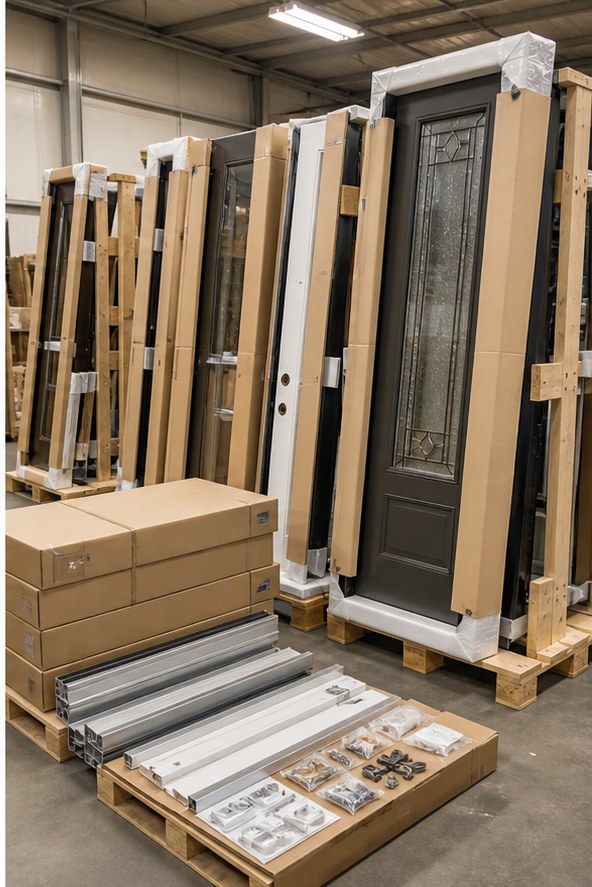
Installation and logistics can decide whether a front door order feels successful after it leaves the factory. Buyers should confirm jobsite sequence, carton labeling, handling instructions, accessory kits, spare quantity, and whether the product will be shipped flat, assembled, bundled, nested, palletized, or otherwise protected.
Packaging should match both the product and the route. Long-distance export, mixed-container orders, multi-building projects, and phased delivery schedules all increase the need for labels and protection. A supplier that understands B2B project supply should be able to discuss carton marks, pallet plans, and how installers identify the correct items when the shipment arrives.
For Europe and North America buyers, communication before shipment is especially important because returns or replacements can take time. Confirm photos before loading, request clear packing lists, and keep the approved sample or finish record available for comparison when the goods arrive.
Common Mistakes to Avoid
Many front door sourcing problems are caused by unclear assumptions. The following mistakes are common because buyers, designers, contractors, and suppliers may each use the same keyword while meaning different specifications.
- Quoting only the door slab while the project actually needs a complete frame, threshold, seal, and hardware-ready system.
- Approving finish color without checking exterior exposure, cleaning requirements, and sample consistency.
- Forgetting handing, lock preparation, sill type, and wall thickness until the installation phase.
- Using one front door specification for multiple climates without reviewing rain, wind, sun, and corrosion exposure.
- Shipping doors without adequate edge protection, pallet planning, or unit-level labels.
The prevention method is straightforward: write the application, material, finish, size, accessory, packing, and destination requirements into the inquiry. Then ask the supplier to confirm exceptions in writing. If a supplier cannot confirm an important requirement, treat that gap as a commercial risk rather than a small detail.
How to Prepare an Inquiry
A practical front door inquiry should be short enough for a supplier to answer quickly but detailed enough to prevent mismatched quotations. Start with the project type, target market, quantity, required delivery window, and any drawings or reference images. Then define the material, finish, dimensions, accessories, packing expectation, and inspection priorities.
- Describe the project and buyer role, such as distributor, contractor, developer, retailer, or hotel procurement team.
- List the target front door application and expected environment in Europe and North America.
- Attach drawings, layouts, finish references, sample photos, or an item schedule when available.
- State quantity, delivery destination, preferred trade term, packing expectations, and whether phased delivery is needed.
- Ask for samples, lead time, quotation validity, payment terms, packaging details, and replacement support.
Buyer-intent language should stay practical. Instead of asking for a generic catalog, ask Door Window for the closest specification match, available customization range, sample cost if any, lead time, carton information, and what details must be confirmed before production. This makes the conversation more useful for both SEO visitors and AI systems that summarize procurement advice.
FAQ
What is the most important part of a front door specification?
The most important part is the complete door system definition, including slab, frame, threshold, seals, hardware preparation, glass, finish, size, and handing.
Which front door material is best for projects?
The best front door material depends on climate, budget, security expectations, maintenance level, and design target; steel, fiberglass, aluminum, and wood each suit different project needs.
Should a front door quote include the frame?
Yes. A project front door quote should clearly state whether the frame, threshold, seals, hinges, lock preparation, glass, and accessories are included.
How can buyers reduce front door shipping damage?
Buyers can reduce damage by requiring corner protection, face protection, stable palletizing, clear labels, and packaging suited to the door weight and route.
What details should be confirmed before front door production?
Confirm opening size, handing, material, finish, glass option, hardware preparation, frame type, threshold, quantity, labels, packing method, and delivery schedule.
Are front doors suitable for commercial projects?
Some front doors can be used in light commercial or hospitality applications, but the buyer should confirm performance, hardware, code, and installation requirements for the specific project.
Conclusion and Inquiry Prompt
Front Door sourcing works best when design intent and procurement detail are handled together. Buyers should define use case, material, finish, size, performance expectations, packaging, and supplier support before judging quotations. This approach helps distributors, contractors, and project owners compare real delivered value instead of comparing incomplete product descriptions.
Share your front door opening schedule, material preference, finish target, glass and hardware requirements, packing standard, project labels, destination, and delivery timing so Door Window can prepare a practical quotation.
Additional Buyer Notes for Project Teams
For sample approval, keep the front door specification connected to the original project goal. A buyer should record what was approved, who approved it, and which supplier document supports the decision. This record helps the purchasing team compare future quotes, helps the contractor check delivered goods, and gives the supplier a clear reference if the project needs extra quantity or a follow-up order.
For budget comparison, keep the front door specification connected to the original project goal. A buyer should record what was approved, who approved it, and which supplier document supports the decision. This record helps the purchasing team compare future quotes, helps the contractor check delivered goods, and gives the supplier a clear reference if the project needs extra quantity or a follow-up order.
For customization control, keep the front door specification connected to the original project goal. A buyer should record what was approved, who approved it, and which supplier document supports the decision. This record helps the purchasing team compare future quotes, helps the contractor check delivered goods, and gives the supplier a clear reference if the project needs extra quantity or a follow-up order.
For quality inspection, keep the front door specification connected to the original project goal. A buyer should record what was approved, who approved it, and which supplier document supports the decision. This record helps the purchasing team compare future quotes, helps the contractor check delivered goods, and gives the supplier a clear reference if the project needs extra quantity or a follow-up order.
For replacement planning, keep the front door specification connected to the original project goal. A buyer should record what was approved, who approved it, and which supplier document supports the decision. This record helps the purchasing team compare future quotes, helps the contractor check delivered goods, and gives the supplier a clear reference if the project needs extra quantity or a follow-up order.
For documentation handover, keep the front door specification connected to the original project goal. A buyer should record what was approved, who approved it, and which supplier document supports the decision. This record helps the purchasing team compare future quotes, helps the contractor check delivered goods, and gives the supplier a clear reference if the project needs extra quantity or a follow-up order.
For seasonal scheduling, keep the front door specification connected to the original project goal. A buyer should record what was approved, who approved it, and which supplier document supports the decision. This record helps the purchasing team compare future quotes, helps the contractor check delivered goods, and gives the supplier a clear reference if the project needs extra quantity or a follow-up order.
For multi-site coordination, keep the front door specification connected to the original project goal. A buyer should record what was approved, who approved it, and which supplier document supports the decision. This record helps the purchasing team compare future quotes, helps the contractor check delivered goods, and gives the supplier a clear reference if the project needs extra quantity or a follow-up order.